Transforming Urban Cycling Experience for Nextbike Platform
Industry
Technologies


Country
Client Overview
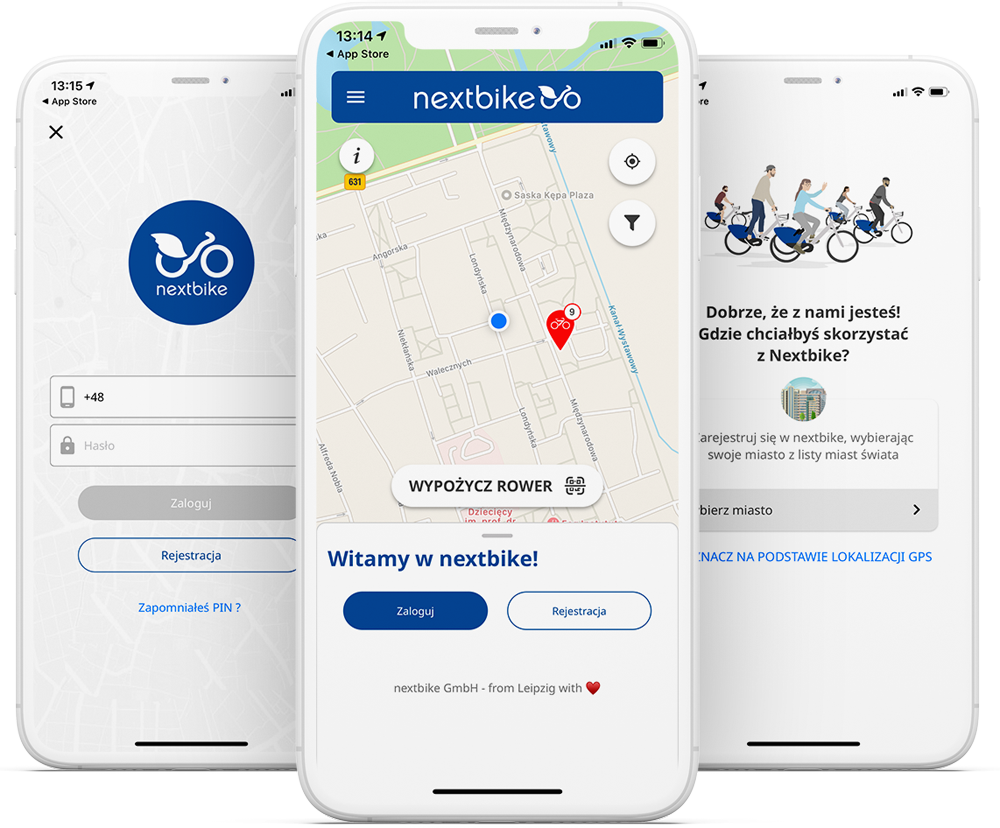
Nextbike is a leading bicycle rental platform in Poland, offering services across major cities in the country. Through a mobile application, users can easily rent bicycles from hundreds of strategically located stations for a nominal fee. The project stands out due to its extensive scale, the imperative of reliability, and the client's aspiration to enhance and modernize the current infrastructure.
Client Needs

Scalable Backend Architecture

Efficient Reporting and Monitoring Systems

User-Friendly API

Strong Security Measures
Nextbike, a prominent bicycle rental platform in Poland, approached the project with a set of distinct needs. These included the development of a scalable and reliable backend architecture tailored to the demands of their mobile application. They sought efficient reporting and monitoring systems for bicycles and stations to ensure smooth operations. Additionally, Nextbike needed a user-friendly API to support new mobile applications, along with strong authentication and authorization to keep the platform secure. The client also emphasized an intuitive front-end for smooth user interaction, and prompt fixes for issues and bugs in existing systems to keep everything reliable.
Services Provided
Backend Development: We designed and implemented a scalable and maintainable backend architecture tailored to the requirements of the mobile application.
Reporting and Monitoring Systems: Our team developed systems for reporting and monitoring bicycles and bicycle stations, ensuring smooth operations and efficient management.
API Design and Implementation: We designed and implemented a clear, efficient API for new mobile applications, enabling clean integration and data exchange.
Authentication and Authorization: We implemented strong authentication and authorization to keep the system secure, so only authorized users could reach sensitive data and functionality.
Front-end Interface Development: Our team designed and built a user-friendly front-end in React, making it easy to view, generate, and work with reports.
Troubleshooting and Bug Fixing:We addressed and resolved bugs and issues in the existing PHP and Node.js systems promptly, ensuring uninterrupted system functionality and performance.
Scope of Work
The main objective of our work at nextbike polska was to maintain and develop existing systems, organize the architecture and gradually introduce new services and features to existing system. Our scope of work:
- Designing and implementing a scalable backend architecture tailored to the mobile application's requirements, including developing API endpoints to handle mobile app requests and integrating with external services and databases.
- Deploying strong authentication and authorization, with effective error management, activity logging, and alerting in place.
- Collaborating with the mobile app development team to align backend services with frontend requirements, and testing backend services for performance, security, and functionality.
- Deploying and monitoring the backend service in a production environment to meet uptime and performance metrics, alongside monitoring and maintaining current Node.js backend systems to ensure continuous service availability and address performance issues.
- Gathering requirements and specifications for the reporting system, and understanding stakeholders' exact needs.
- Designing and developing an intuitive user interface in React for report viewing, generation, and interaction, integrating with backend services and databases to fetch necessary data for reports, and ensuring the reporting system is responsive and optimized for various screen sizes and devices.
- Testing the reporting system for usability, performance, and functionality, troubleshooting and fixing bugs/issues in PHP and Node.js systems as they arise, and collaborating with stakeholders to understand evolving requirements, and adapt existing systems accordingly.
Technologies Used




Development Process
Our development process for the Nextbike project involved close collaboration with the client, agile methodology, and rigorous testing. We began with a thorough analysis, adopted an iterative approach, and maintained open communication throughout. Our focus was on delivering high-quality solutions that met the client's needs efficiently.
Check our work on ClutchWhat our clients say

The team showcased best practices in code quality and architecture, leading to scalable and maintainable solutions. The team was exceptionally responsive to feedback throughout the development process. Regular check-ins and review meetings facilitated an open line of communication, allowing for iterative adjustments based on our needs. They felt like our employees - they were perfectly mixed into our culture and working style.